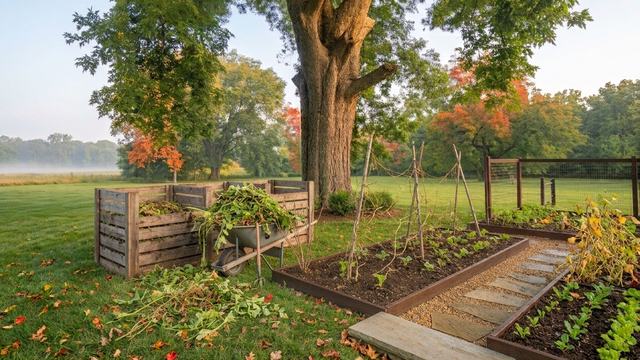
As September arrives, Warren County gardens transition into a crucial bridge between the warm growing season and winter dormancy. Taking the right steps now sets the stage for a healthy landscape and a vibrant, productive garden next spring.
Caring for Trees, Shrubs, and Flowers
Early fall requires a shift in how we approach woody plants and flower beds. Pruning trees and shrubs should be avoided this month, as cutting them back stimulates tender new growth that will not have time to harden off before the first killing frost. September and October are, however, ideal months for planting peonies, provided they are placed in a spot shielded from harsh afternoon sunlight.
In flower gardens, allow perennials to die back naturally to the ground. Leaving seed heads intact provides a valuable seed source for winter birds, or you can harvest those seeds to sow elsewhere. September is also the time to plant hardy annuals and biennials to secure early spring blooms. Across all landscape beds, aim to provide about one inch of water per week if rainfall is scarce.
Reflecting and Preparing Vegetable Beds
September is the perfect opportunity to review the vegetable garden while the season is fresh in your mind. Take note of what succeeded, what struggled, and what failed, and begin plotting improvements for next year. To prevent insect and disease buildup in the soil, plan to rotate your crops so related vegetables are not planted in the same location next season. Once garden beds clear out, sow cover crops such as winter rye, annual ryegrass, or crimson clover. These crops reduce winter erosion, keep weeds at bay, and build rich organic matter for future plantings.
Maintaining and Revitalizing Lawns
Turfgrass requires targeted care during early autumn, with all lawns benefiting from a thorough one-inch watering applied in the early morning each week. Warm-season lawns need a boost of one pound of potassium per 1,000 square feet to strengthen roots, but nitrogen should be strictly avoided to minimize the risk of spring dead spot disease. Continue mowing warm-season turf weekly at a height of 1 to 2 inches.
Cool-season lawns demand a bit more attention in September. Aerate turf grown on clay soils or subject to heavy foot traffic, and overseed bare patches as temperatures ease, using a blend of tall fescue cultivars at a rate of 6 pounds of seed per 1,000 square feet. Keep newly seeded areas consistently moist. Apply lime and fertilizer strictly according to soil test results, and use herbicides to target weeds, making sure to check labels to protect young turf grass. Keep cool-season grass mowers set between 2.5 and 3 inches.
Finally, keep a close eye out for turf diseases—including large patch, brown patch, leaf spot, dollar spot, and fairy rings—managing them through proper watering habits, thatch removal, and targeted fungicides if necessary. Early fall is also the prime window to inspect for white grubs, which can be effectively controlled using milky spore disease (Paenibacillus popilliae).